

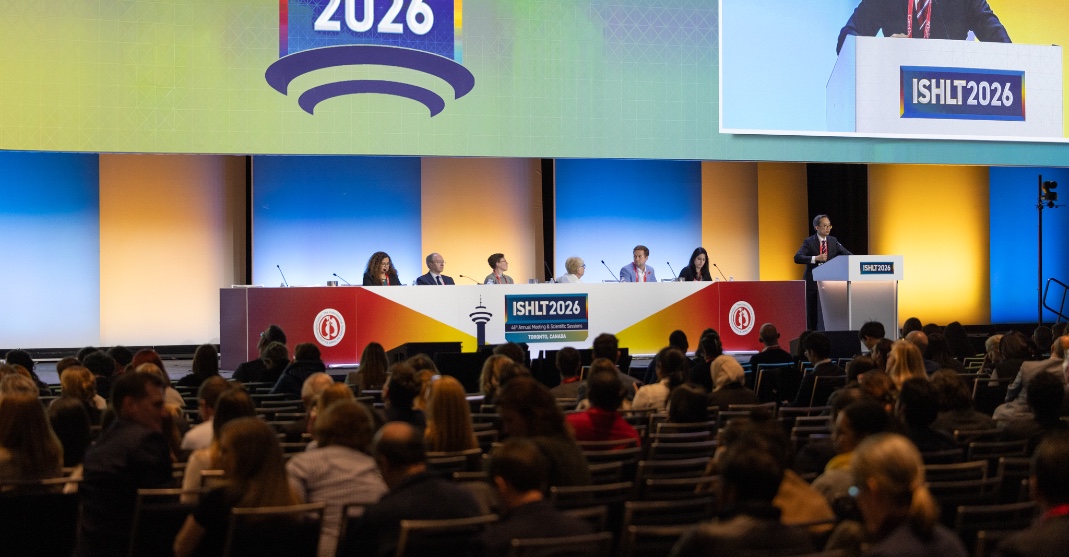
ISHLT2027 Call for Abstracts
Submission Deadline:
Tuesday, 29 September at 11:59 p.m. ET /
Wednesday, 30 September at 3:59 UTC
ePoster Research Abstracts
Abstract submission for ISHLT2027 is now closed.
An ePoster Research Abstract is a concise summary of a research study, designed to give readers a quick overview of the essential aspects of the work. The abstract should be clear, concise, and informative, providing enough detail to help readers determine the relevance and value of the full study.
Accepted ePosters will be:
- Published in The Journal of Heart and Lung Transplantation
- Displayed electronically during the meeting
- Made available to registered meeting attendees
**ePoster submitters will not present their work in person or virtually and are not required to register for the meeting.
ePoster Research Abstract content should include:

- Purpose: Briefly describe the problem being addressed, its significance, and the knowledge gap, unmet need, or question that motivated the study. State the study objective or hypothesis.
- Methods: Summarize the study design, population, experimental approach, and analytical methods used to address the research objective. Include only the key methodological details necessary to understand how the study was conducted.
- Results: Present the principal findings of the study, emphasizing results that directly address the objective or hypothesis. Include relevant quantitative outcomes and statistical results where applicable.
- Conclusion: Summarize the primary findings and their significance. Highlight the main takeaway and potential implications for future research, clinical practice, or patient care.
ePoster Research Abstract Size Limits
- 2,140 characters (spaces are ignored)
- Includes characters in the Abstract Title, Abstract Body, Table(s), and Image(s).
- Includes characters in the research abstract default headings Purpose, Methods, Results, and Conclusion.
- A Table or Image removes 320 characters from the limit. The amount of data in the table does not impact the character count.
- Author names and institutions are not counted in the character limit.
A ePoster Research Abstract submission is divided into the following steps:
Your ePoster Research Abstract title should be clear and concise that accurately reflects the main topic, finding, innovation, or educational value of the submission. Remember, characters in your title are included in the size limit.
Author information does not count towards the character limit.
The Submitting Author is automatically listed as first author. You may change this after adding authors. Submitting authors should ensure that any co-authors included are aware they are being listed on the abstract.
The First Author will serve as the primary contact for the abstract and will receive all communication, including notification of acceptance or rejection on 4 December. It is their responsibility to inform all co-authors of the submission’s outcome. If the abstract is accepted, the first author will receive an email on 18 December and will have until 22 January 2027 to confirm or withdraw the abstract. If confirmed, the first author will receive instructions on preparing and uploading the ePoster.
Co-Authors included should be those who contribute significantly to the intellectual content of the abstract (maximum 50 authors). You can use the ISHLT database search tool on the submission site to find and add your authors. Authors will be listed in the author block in the order they are added but can be rearranged after adding.
ePoster Research Abstract categories are organized into four Core Therapies to help guide your category selection:
- HEART (Advanced Heart Failure & Transplantation)
- LUNG (Advanced Lung Failure & Transplantation)
- MCS (Mechanical Circulatory Support)
- PVD (Pulmonary Vascular Disease (PAH & CTEPH)
You will choose one category from within a single core therapy that best represents your abstract. You may submit your abstract only once. Submitting the same abstract multiple times, or splitting one study into multiple submissions, is not allowed. If submissions are found to be too similar or duplicated, they may be rejected. Taking the time to select the most appropriate category will help ensure your work is reviewed by experts in the relevant field.
HEART

- HEART-Basic Science-Artificial Intelligence Applications
- HEART-Basic Science-Immunology/Inflammation/Biomarkers
- HEART-Basic Science-Models of Organ Preservation/Perfusion/Regeneration/Graft Injury
- HEART-Basic Science-Translational Research/Genetics/Multiomics
- HEART-Basic Science-Xenotransplantation/Artificial Organs/Cell Therapy
- HEART-Cardiac Allograft Vasculopathy
- HEART-Cardiogenic Shock (non-MCS)
- HEART-Clinical-Other
- HEART-Critical Care Medicine/Peri-operative/Intra-operative Management
- HEART-Digital Health/Artificial Intelligence/Health Technologies
- HEART-Donor Evaluation and Management (including DCD and DBD)
- HEART-Donor Heart Procurement/Preservation/Perfusion
- HEART-Experiences From Around the Globe/Emerging Programs
- HEART-Health Equity/Economics/Ethics/Public Policy
- HEART-Healthcare Delivery and Quality Improvement
- HEART-Heart Failure (right/left/biventricular/systolic/diastolic)
- HEART-Immunology/Inflammation (Clinical)
- HEART-Infectious Diseases-Diagnostics/Management/Therapeutics
- HEART-Multi-Organ Transplant
- HEART-Nursing/Allied Health/Other
- HEART-Organ Allocation/Policy/Utilization
- HEART-Outcomes-Functional Capacity, Frailty, Exercise Tolerance
- HEART-Outcomes-Other
- HEART-Outcomes-Psychosocial/Mental Health/Palliative Care
- HEART-Outcomes-Safety/Risk Prediction/Modelling
- HEART-Outcomes-Survival-Short-Term (12 months or less)
- HEART-Outcomes-Survival-Medium to Long-Term (over 12 months)
- HEART-Pathology/Diagnostics/Imaging
- HEART-Pediatric Heart Failure and Congenital Heart Disease Management
- HEART-Pediatric Other
- HEART-Pediatric Outcomes
- HEART-Pediatric Patient Selection/Organ Allocation/Donor Management
- HEART-Pharmacology/Therapeutics/Immunosuppression
- HEART-Primary Graft Dysfunction
- HEART-Recipient Selection for Transplant and/or Advanced Therapies
- HEART-Rejection-ACR or AMR
LUNG

- LUNG-Basic Science-Artificial Intelligence Applications
- LUNG-Basic Science-Ex-Situ Assessment/Preservation/Restoration
- LUNG-Basic Science-Immunology/Inflammation/Injury/Biomarkers (Animal)
- LUNG-Basic Science-Immunology/Inflammation/Injury/Biomarkers (Human)
- LUNG-Basic Science-Translational Research/Genetics/Multiomics
- LUNG-Basic Science-Xenotransplantation/Artificial Organs/Cell Therapy
- LUNG-Clinical-ALAD (Acute Lung Allograft Dysfunction)
- LUNG-Clinical-BLAD (Baseline Lung Allograft Dysfunction)
- LUNG-Clinical-CLAD (Chronic Lung Allograft Dysfunction)
- LUNG-Clinical-Immunology/Inflammation
- LUNG-Clinical-Organ Preservation/Transport/Ex Situ
- LUNG-Clinical-Other
- LUNG-Clinical-Pharmacology/Therapeutics/Immunosuppression/Desensitization Strategies
- LUNG-Digital Health/Artificial Intelligence/Health Technologies
- LUNG-Donor Management
- LUNG-Experiences From Around the Globe/Emerging Programs
- LUNG-Health Equity/Economics/Ethics/Public Policy
- LUNG-Infectious Diseases-Diagnostics/Management/Complications
- LUNG-Multidisciplinary Team Care Delivery
- LUNG-Nursing/Allied Health/Other
- LUNG-Organ Allocation
- LUNG-Outcomes-Cardiovascular/Gastrointestinal/Renal/Malignancy
- LUNG-Outcomes-Functional Capacity, Frailty, Exercise Tolerance
- LUNG-Outcomes-Other
- LUNG-Outcomes-Psychosocial/Mental Health/Palliative Care
- LUNG-Outcomes-Survival-Short-Term (12 months or less)
- LUNG-Outcomes-Survival-Medium to Long-Term (over 12 months)
- LUNG-Pathology/Clinical Diagnostics/Imaging
- LUNG-Pediatrics
- LUNG-Peri-operative Extra Corporeal Life Support (ECLS)
- LUNG-Primary Graft Dysfunction
- LUNG-Prognostication/Risk-Stratification
- LUNG-Recipient Selection for Transplant and/or Advanced Therapies
- LUNG-Rejection-ACR or AMR
- LUNG-Surgical Aspects and Peri-operative Management
MCS

- MCS-Adult Congenital Heart Disease
- MCS-Adverse Events
- MCS-Basic Science-Translational Research/Genetics/Multiomics
- MCS-Cardiogenic Shock-ECMO/Left-Right-BiV tMCS
- MCS-Cardiogenic Shock-Patient Management/Medical Therapies/Outcomes
- MCS-Clinical-Other
- MCS-Digital Health/Artificial Intelligence/Health Technologies
- MCS-Durable MCS-Outcomes-Survival Short-term (3 months or less)
- MCS-Durable MCS-Outcomes-Survival Long-term (more than 3 months)
- MCS-Durable MCS-Selection/Pre- Peri- and Post-operative Management
- MCS-Experiences From Around the Globe/Emerging Programs
- MCS-Health Equity/Economics/Ethics/Public Policy
- MCS-Myocardial Recovery-Assessment/Pharmacotherapy/Weaning Strategies
- MCS-Novel Devices/Engineering/Miniaturization/Surgical Techniques
- MCS-Nursing/Allied Health/Other
- MCS-Outcomes-Functional Capacity, Frailty, Exercise Tolerance
- MCS-Outcomes-Psychosocial/Mental Health/Palliative Care
- MCS-Pediatrics-Temporary and Durable Devices
- MCS-Precision Diagnostic-Biomarker/Wearable Monitoring/AI Guidance
PVD

- PVD-Basic Science/Translational Research/Genetics/Multiomics
- PVD-Clinical-Other
- PVD-Clinical Trials (Groups I II III IV or V) - not Late Breaking
- PVD-Digital Health/Artificial Intelligence/Health Technologies
- PVD-Experiences From Around the Globe/Emerging Programs
- PVD-Health Equity/Economics/Ethics/Public Policy
- PVD-Nursing/Allied Health/Other
- PVD-Outcomes-Functional Capacity, Frailty, Exercise Tolerance
- PVD-Outcomes-Psychosocial/Mental Health/Palliative Care
- PVD-Pediatric Pulmonary Hypertension
- PVD-RV Physiology and Imaging including Right Heart Failure (Acute or Chronic)
- PVD-Surgical/Interventional/Perioperative Considerations
- PVD-Group I Pulmonary Arterial Hypertension
- PVD-Group II PH Left Heart Disease
- PVD-Group III PH Lung Disease
- PVD-Group IV CTEPH (including CTED)
- PVD-Group V Complex Conditions
You will be asked to select the Primary Practice Area most relevant to your Research Abstract even if it is different from your own primary area of practice, and additional relevant practice areas, from the following list:
- Anesthesiology & Critical Care
- Cardiology
- Cardiothoracic Surgery
- Infectious Diseases
- Nursing & Allied Health
- Pathology
- Pediatrics
- Pharmacy
- Pulmonology
- Research & Immunology
To ensure transparency and maintain the integrity of our scientific program, several questions will be asked regarding funding sources and affiliations. This information allows us to accurately acknowledge the support behind the research—whether from industry, ISHLT, or ISHLT-managed registries.
- Is this abstract being funded (in part or in whole) by industry? (Yes/No). If yes, identify the company.
- Does this abstract involve data from an ISHLT Registry? (Yes/No). If Yes, identify the Registry (ISHLT Thoracic Transplant Registry or IMACS Registry)
- Is this abstract based on work that was funded entirely or in part by an ISHLT grant/award? (Yes/No). If Yes, identify the grant/award.
In this step, the body of the ePoster Research Abstract and any tables or images are entered. Follow the links on the site to enter each element.
- Do not include the abstract title or authors in this text.
- Abstracts undergo a blind review process; therefore, abstain from using institution and corporate names whenever possible.
- Avoid the use of commercially branded names of medications or devices. If a specific medication/device is only identifiable by its trade name, then this should appear in brackets after a generic description of the medication/device.
- Abstracts must use scientific or generic names when referring to products. Should it be necessary to use a trade name, then the trade names of all similar products or those within a class must be used.
A $150 (USD) processing fee must accompany each ePoster Research Abstract. ISHLT accepts payment only in the form of MasterCard, Visa and American Express. Purchase orders, checks, and electronic bank transfers will not be accepted. $125 USD will be refunded if the abstract is not accepted.
Once you’ve finished all steps, this page will indicate the submission is COMPLETE and no further action is required. However, we strongly encourage you to review your Submission carefully, including the list of authors and all content, to ensure everything is accurate. You can make corrections to any portion, including authors, by the deadline of Tuesday, 29 September at 11:59 p.m. ET / Wednesday, 30 September at 3:59 UTC.
Help and Support
For Technical Support please contact:
cOASIS Technical Support Team
+1 217-398-1792
ishlt@support.ctimeetingtech.com
The support desk is staffed from 8:00 a.m. – 5:00 p.m. Central Time, Monday-Friday (excluding holidays)
For general submission questions please contact:
Beth Reed, ISHLT Education Manager
+1 312-224-0048
beth.reed@ishlt.org