
ISHLT Foundation Funds Research in AI + Biomarkers, Pediatric Heart Transplantation, + ECP
Published 15 May 2026
During the 46th Annual Meeting & Scientific Sessions in Toronto, ISHLT announced $400,000 USD in grants funded by the ISHLT Foundation to support research to advance heart and lung disease.
ISHLT Utilization of Molecular Biomarkers in Combination with Artificial Intelligence/Machine Learning in the Care of Heart Transplant Candidates or Recipients Grant, supported by CareDx
 Awarded to: Karl Lemstrom, MD, PhD
University of Helsinki | Helsinki, Finland
Research Title: Artificial Intelligence-Integrated Molecular Biomarkers for Precision Monitoring in Heart Transplant Recipients
This project aims to make heart transplant follow-up safer, easier, and more precise by reducing the need for repeated invasive heart biopsies. Researchers will develop new blood tests that can detect early signs of injury or rejection in the transplanted heart. These tests measure tiny biological signals in the blood, such as fragments of donor DNA and markers of immune activity. By combining these signals with artificial intelligence, the team will create tools that can continuously track a patient’s condition and predict problems earlier than current methods.
 Awarded to: Humera Ahmed, MD
Children's Hospital of Philadelphia | Philadelphia, PA USA
Research Title: HERO-MAE: Integrating Wearable Physiologic Monitoring and AlloSure dd-cfDNA with Machine Learning for Early Detection of Major Adverse Events in Pediatric Heart Transplant Recipients
The HERO-MAE trial is designed to use wearable devices to detect adverse events in children with a heart transplant, ideally before the child develops any symptoms. Children will be followed clinically the way that the team usually would, including clinic appointments for an EKG, echocardiogram, and blood work (BNP, cell-free DNA). Machine learning will be used to correlate any adverse events (e.g. rejection, infection) that occur during the study with changes in physiologic data that were continuously captured by the wearable device.
ISHLT/Enduring Hearts Pediatric Heart Transplantation Innovation Challenge Grant
 Awarded to: Alireza Raissadati, MD, PhD
Stanford University | Palo Alto, CA USA
Research Title: Distinguishing Cellular from Antibody-Mediated Heart Transplant Rejection Using Plasma Cell-Free mRNA
Rejection is the leading cause of death in children during the first three years after transplant. The best way to prevent these rejections is to catch them early, before they cause symptoms. This research uses a blood test that can catch tiny signals. This blood test could transform how we care for children with heart transplants. When we find rejection early and treat it right, children with heart transplants can live longer and stay healthier.
ISHLT Extracorporeal Photopheresis Immunomodulation in Thoracic Transplantation Challenge Grant, supported by Therakos LLC
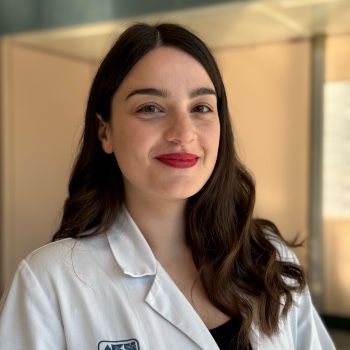 Awarded to: Sophia Alemanno, MSc
Medizinische Universität Wien | Wien, Austria
Research Title: The Use of Extracorporeal Photopheresis as Immunomodulatory Procedure for Subclinical Antibody-Mediated Rejection and Chronic Lung Allograft Dysfunction: A Prospective Randomized Controlled Trial
This project studies how extracorporeal photopheresis (ECP) changes immune cells and immune signals in patients who have early signs of antibody-mediated immune responses after lung transplantation. By analyzing patient samples collected within an ongoing clinical trial, the study aims to identify how ECP may reduce harmful immune activity before permanent lung damage develops. Understanding these mechanisms may help doctors treat patients earlier and more safely, ultimately improving long-term transplant survival and quality of life.
Research Fellowship
 Awarded to: CJ Arnold, BS
Duke University | Durham, NC USA
Research Title: Interleukin-4 Gene Therapy for the Rehabilitation of Acutely Injured Donor Lungs
This research aims to make more donor lungs usable for transplant by repairing them before surgery. Using a system that keeps lungs functioning outside the body, the team is testing a new gene therapy that delivers temporary healing signals to reduce inflammation and promote tissue repair.
 Awarded to: Daniele Evangelista Leite da Silva, MD, PhD
University Health Network | Toronto, ON Canada
Research Title: Click Chemistry for Targeted mRNA Delivery During Ex Vivo Lung Perfusion: A Novel Strategy to Improve Donor Lung Quality
This project aims to improve donor lung quality before transplantation by developing a targeted way to deliver genetic therapies during ex vivo lung perfusion (EVLP). This research uses an innovative click chemistry strategy to guide mRNA‑carrying lipid nanoparticles (LNPs) directly to target cells during EVLP, enabling precise treatment where it is needed most. This approach could enhance lung repair, reduce early graft dysfunction, and increase the number of lungs suitable for transplant.
 Awarded to: Rosaria Ferreira, MD
Beatrix Children’s Hospital / University Medical Center Groningen | Groningen, Netherlands
Research Title: Transforming Pediatric Pulmonary Vascular Disease with a Novel Non-Invasive Vascular Phenotyping Tool
This study will test whether VascQuant can be reliably useful for detecting and monitoring disease in the blood vessels of the lungs. By comparing the measurements with clinical tests and health results, the project aims to show that VascQuant can safely support diagnosis, disease monitoring, and risk assessment for this devastating condition. Ultimately, this research could reduce the need for invasive procedures and improve care for children living with this life-threatening disease.
 Awarded to: Erin Isaza, MD
Brigham and Women’s Hospital | Boston, MA USA
Research Title: CMAH-Dependent Immune Injury in Lung Xenotransplantation
While lung transplantation can be a lifesaving option for individuals with serious lung disease, there are simply not enough human donor lungs to meet demand. One promising solution is the use of lungs from genetically altered pigs; however, when tested on baboons, one of the most advanced genetically modified pig lungs failed at rates much greater than anticipated, creating concerns regarding their feasibility and safety. The purpose of this project is to investigate why these failures occur. The goal is to determine which of the genetic options provides a more accurate predictive assessment of how these organs will perform when transplanted into humans, and ultimately bring pig-to-human lung transplantation closer to reality.
 Awarded to: Bilal Khan Mohammed, MBBS, MD
Northwestern University Feinberg School of Medicine | Chicago, IL USA
Research Title: Integrative Single-Cell Profiling of Donor and Recipient peripheral blood mononuclear cells in Heart Transplantation: Links to Primary Graft Dysfunction and Remote Organ Injury
This research focuses on understanding why some patients experience serious complications shortly after a heart transplant—even when the surgery itself is successful. This study explores how donor immune cells behave immediately after transplantation. Using advanced technologies, the team analyzes blood samples from transplant patients at multiple time points to track how different immune cells change and communicate. By identifying these harmful immune responses, this project aims to uncover new ways to predict which patients are at the highest risk for complications and to develop targeted treatments that can be applied during organ preservation or immediately after transplant.
For more information about ISHLT and ISHLT Foundation Research Grants, visit www.ishlt.org/grants-and-awards/research-grants. The next grant cycle opens near the end of May 2026.